How to Evaluate a Handbag Hardware Manufacturer Before Your First Order
When you compare a handbag hardware manufacturer with other candidates, you need to know which one can meet your design, budget, and delivery requirements. Start with the same project brief, then compare technical feedback, quotation scope, and production controls. This guide explains what to ask, which evidence to review, and which gaps to resolve before you place your first order.
1. Give Each Handbag Hardware Manufacturer the Same Project Brief
Choose a component or matching set from your next collection. Share identical requirements with every candidate so you can compare each handbag hardware manufacturer on the same basis.
For shoulder strap hooks, provide information about the mating rings and strap construction. A catalog photo cannot confirm fit.
Your brief should include:
- A drawing, reference sample, or marked sketch.
- The function and installation position.
- Mating parts and surrounding materials.
- Material, finish, and logo requirements.
- Quantity by design and finish.
- The date usable parts must reach your factory.
Ask each handbag hardware manufacturer to identify missing information before quoting. Mark assumptions clearly and decide who will confirm them.
If a bag accessories manufacturer proposes an existing component, check whether its dimensions and attachment method suit your bag.
Find a starting point for your project.
Choose a component, then include its reference in your brief.
2. Compare the Full Quotation
A handbag hardware manufacturer may offer a lower unit price while excluding development, testing, or protective packaging. Compare the complete scope.
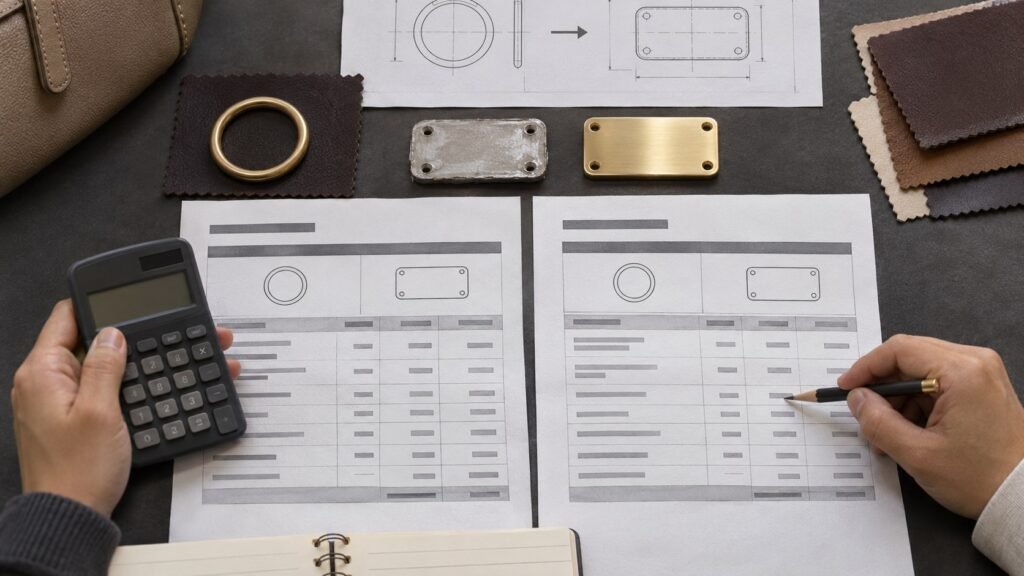
Suppose you need two finishes at 300 pieces each. An MOQ of 500 could mean a total minimum or a minimum per finish. The latter requires at least 1,000 pieces. These quantities illustrate the calculation, not an industry benchmark.
Ask your bag hardware supplier to confirm:
Item | What to establish |
| Unit price | Drawing revision, material, finish, and quantity covered |
| MOQ | Minimum per design, size, finish, or order |
| Development | Tooling, samples, included revisions, and additional charges |
| Inspection | Included checks and separately quoted testing |
| Packaging | Protection, labels, and packing quantities |
| Delivery | Delivery terms and the lead-time starting point |
Before selecting a handbag hardware manufacturer, check that each quotation covers the same development route. Existing tooling and a new design may involve different costs and approvals.
3. Test the Quality of Technical Feedback
Ask your shortlisted handbag hardware manufacturer to review the actual design before you pay for tooling.
For a hook-and-ring connection, ask what can be checked from drawings and what requires physical assembly. The reply should identify missing dimensions, possible interference, and the proposed verification.
Ask the handbag hardware manufacturer to record four details: your requirement, the identified concern, the proposed action, and its effect on cost or timing.
A handbag hardware manufacturer that recommends changing the hook opening should explain how that affects fit and movement. For custom logo tags, if it suggests simplifying the artwork, ask to review the finished result before approval.
For leather goods hardware, also check the surrounding assembly. A different attachment may require new hole positions or reinforcement.
If a handbag accessories manufacturer gives an unconditional approval without reviewing these details, keep fit unconfirmed until the necessary checks are complete.
Have a drawing or reference sample?
Share it with BISSZA, along with mating-part details, quantity by finish, and your required arrival date.
4. Check Process Ownership
Your handbag hardware manufacturer may perform some operations internally and use production partners for others. Establish how requirements and inspection decisions move between them.
For outsourced finishing, ask who sends the physical reference, checks returned parts, and authorizes assembly or packing.
Ask the handbag hardware manufacturer to identify:
- Who controls drawings and approved samples.
- Who communicates requirements to production partners.
- Who approves material or process changes.
- Who can stop production or shipment.
- Who coordinates corrective action.
A handbag hardware supplier should provide a clear project contact. During a visit or remote review, follow a comparable component through its records. Request an example showing how a defect was contained and corrected.

5. Link Samples to Production Controls
A handbag hardware manufacturer needs an agreed basis for reproducing and inspecting your approved sample.
Record the part number, drawing revision, material, physical finish reference, approval status, and production inspection requirements. Keep appearance approval separate from fit or performance checks that remain open.
For matching hooks and rings, compare the parts together under agreed viewing conditions. A finish name alone leaves room for different interpretations.
Ask your handbag hardware manufacturer how it will check initial production pieces, inspect the batch, record results, and isolate rejected parts.
For coordinated leather bag accessories, confirm who reviews the complete set before release.
When a handbag hardware manufacturer provides an earlier test report, check the sample identity, material, finish, method, conditions, and acceptance criteria. Establish what it supports for your order and what needs further verification.
Use the existing Bag Hardware Sampling Checklist for detailed sample checks.
6. Verify Delivery and Defect Handling
Ask the handbag hardware manufacturer to work backward from your required arrival date. Separate drawing approval, sample approval, production, inspection, and transport.
Test the schedule with one question: If the first finish sample fails approval, when must the next decision be made to protect the arrival date?
With your handbag hardware manufacturer, also agree on surface protection, component separation, labels, and packing quantities. A purse hardware supplier should explain how shortages and damaged parts will be documented and handled.
Before appointing a handbag hardware manufacturer, discuss a pre-shipment defect. Who isolates the batch, approves the correction, verifies the result, and updates delivery?
Record the agreed actions rather than relying on a general promise to resolve problems.
7. Make a Separate Decision at Each Stage
A handbag hardware manufacturer may be suitable for sampling but still need further review before a bulk order.
Compare each handbag hardware manufacturer using the same checklist:
Area | Evidence to review |
Technical fit | Review comments and unresolved assembly questions |
Commercial scope | Itemized quotation and quantity split |
Production control | Approved references and inspection arrangements |
Responsibility | Named contacts for changes, release, and defects |
Delivery | Approval deadlines and arrival plan |
Before committing to a handbag hardware manufacturer, close gaps affecting fit, acceptance, cost, or delivery. Assign an owner and deadline to anything still open.
Frequently Asked Questions
Can you approach a handbag hardware manufacturer without complete drawings?
Yes. Provide a reference sample or marked sketch, intended function, mating parts, and quantity. Ask which information is needed for a confirmed quotation.
How do you compare a manufacturer with a supplier?
Check who reviews designs, controls specifications, inspects production, and handles defects. Compare responsibilities for your project rather than company labels alone.
Can you use an earlier test report?
Only rely on conclusions supported by its scope. Review the tested component, material, finish, and conditions, then agree on additional verification where needed.
What should you confirm before reordering?
Review specification changes, finish references, tooling status, delivery needs, and corrective actions from the previous order.
What if a candidate cannot share customer records?
Ask for an anonymized example or a proposed inspection record for your project. Distinguish process examples from evidence of completed work.
Final Thoughts
Choose a handbag hardware manufacturer using comparable project evidence. Confirm costs, approved references, responsibilities, and delivery before ordering. To discuss your project with BISSZA, share your drawing or sample, quantity by finish, and required arrival date.
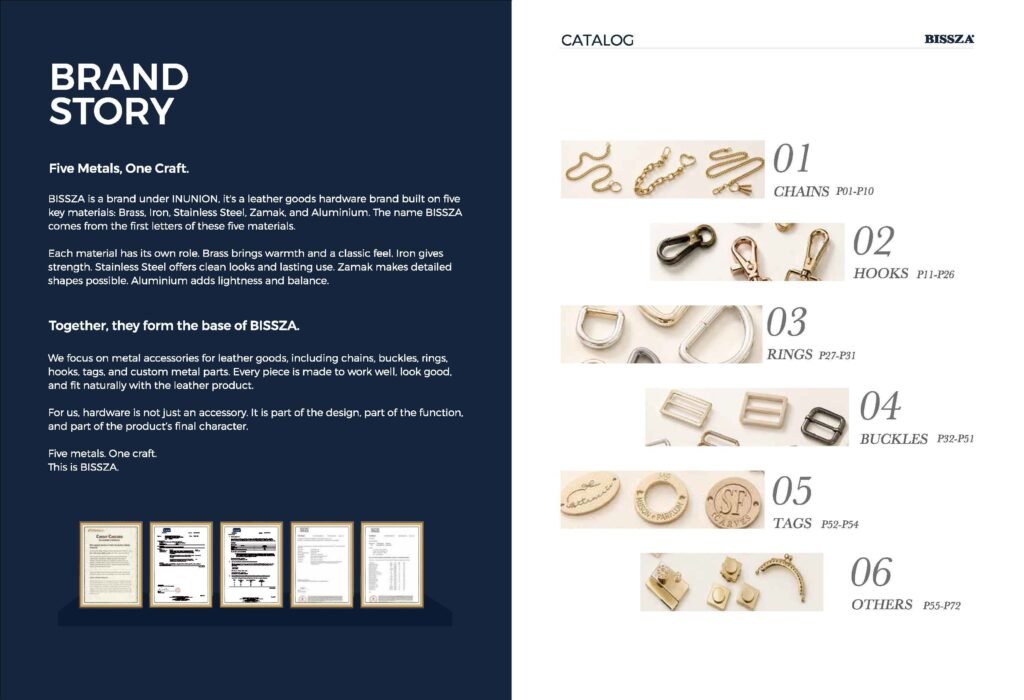
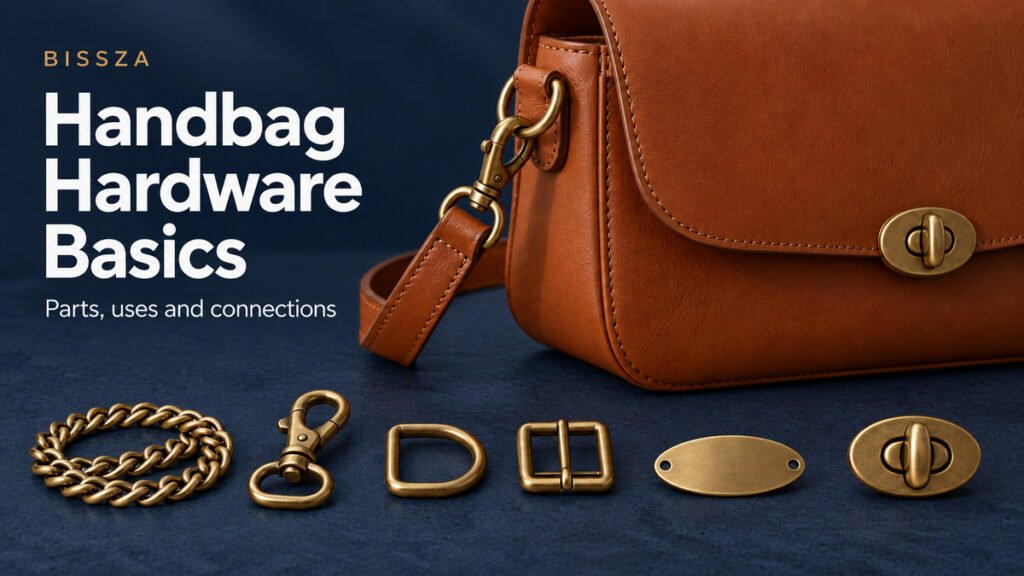
Images illustrate procurement and inspection scenarios. They are AI-generated and do not document BISSZA products, facilities, or test results.
Ready to discuss your first order?
Share your drawing or reference sample, quantity by finish, and required arrival date with BISSZA.